






Description
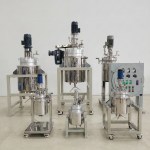
WHGCM High-Pressure Jacketed Laboratory Reactors 0.1–50 L Series
WHGCM high-pressure jacketed laboratory reactors are stainless-steel stirred autoclaves for demanding high-temperature and high-pressure reactions in R&D laboratories and pilot plants. The series covers nominal volumes from 0.1 to 50 L, with typical design pressures up to 30–35 MPa (higher for small volumes on request) and working temperatures up to 450–500 °C.
Kreator Lab BG supplies, configures and supports these reactors in Europe, helping you choose the optimal vessel volume, pressure rating, materials and control system for your process.
Detailed product description
Overview
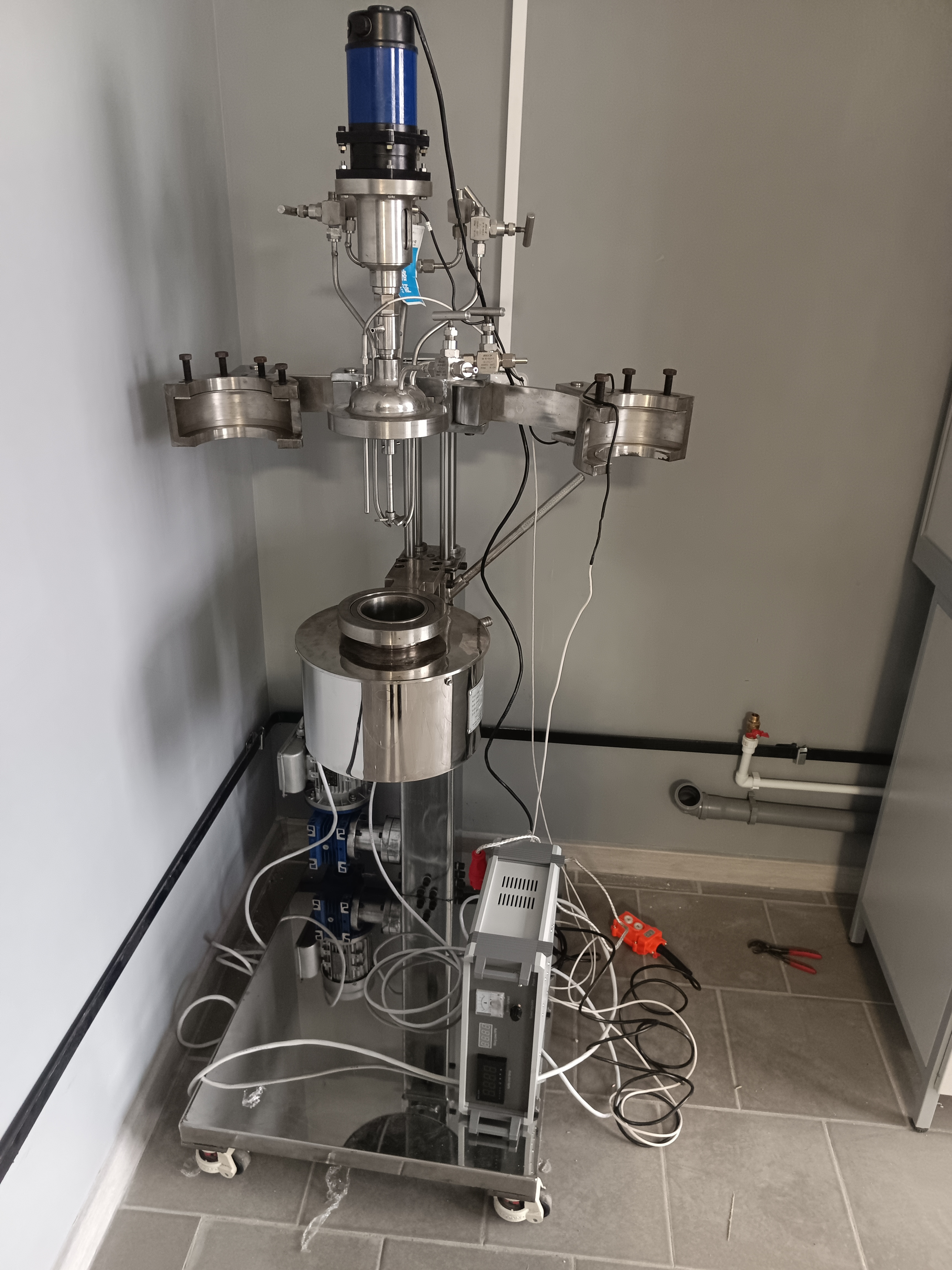
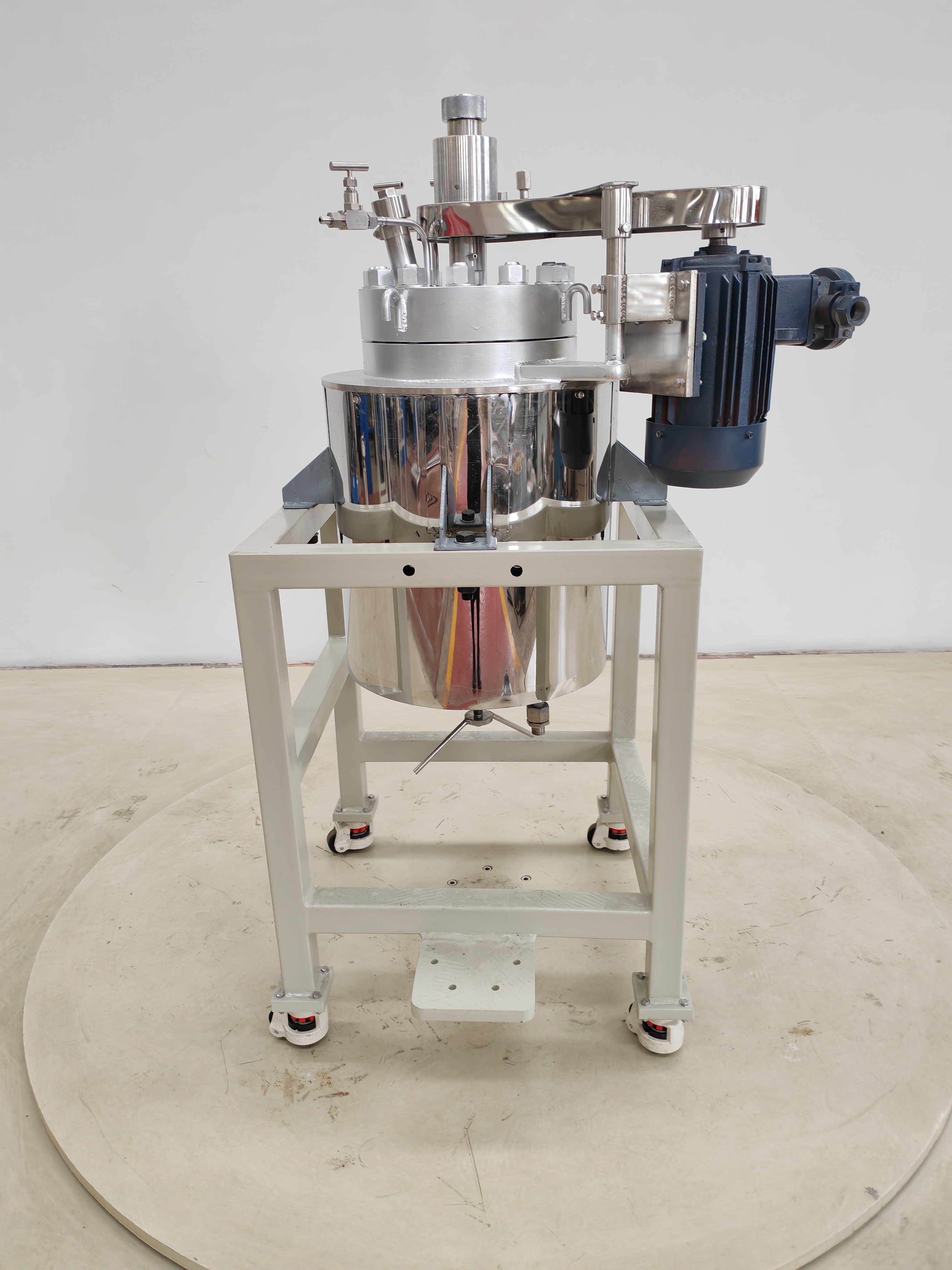
WHGCM high-pressure jacketed laboratory reactors are vertical, stirred pressure vessels designed for safely performing reactions far above the boiling point of common solvents. Each reactor consists of a stainless-steel autoclave with heating/cooling jacket or electric heating, a removable clamped lid, a bottom outlet valve and a top-mounted agitator.
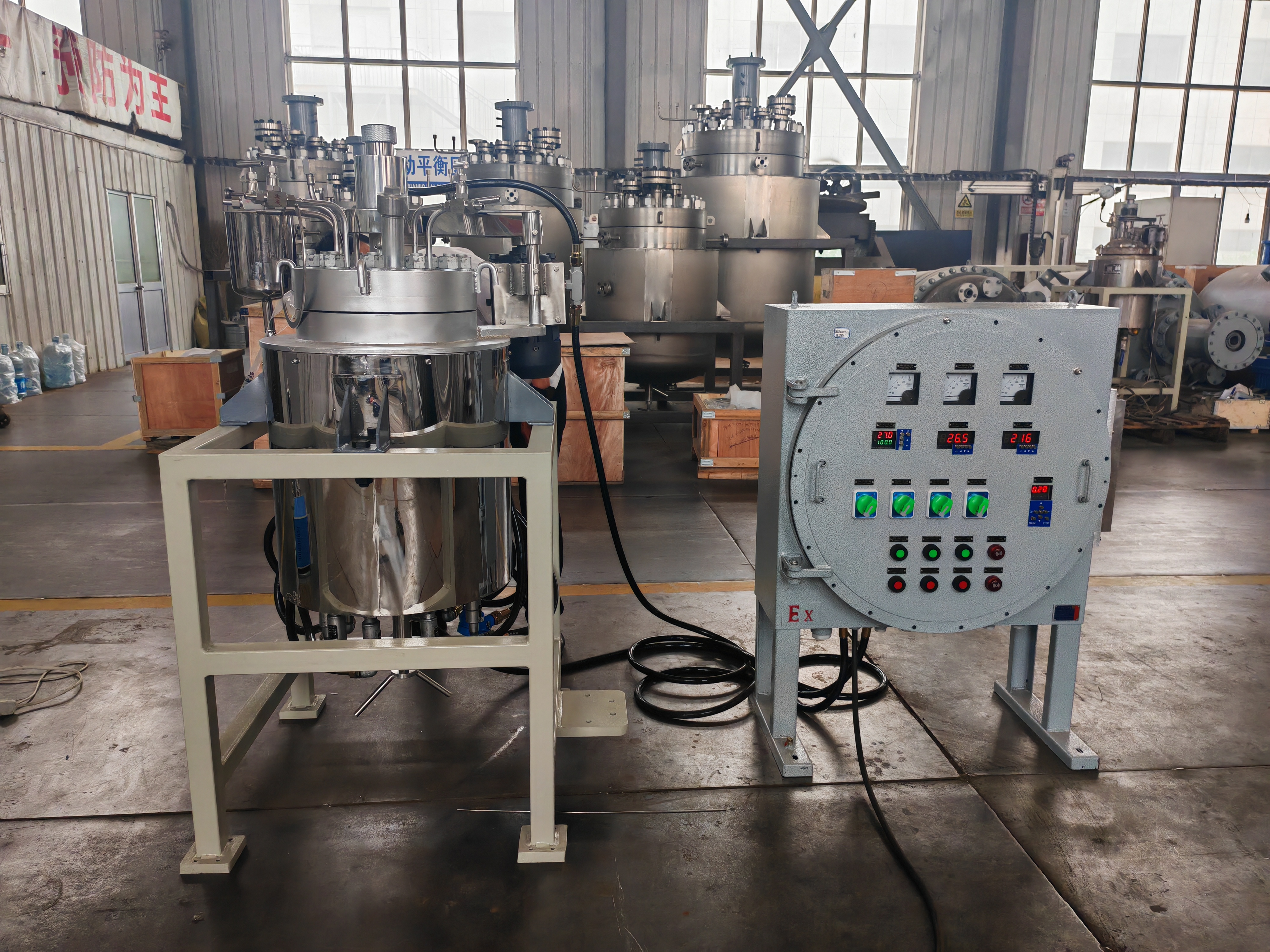
Depending on volume and configuration, units can be supplied as benchtop reactors (0.1–1 L) or floor-standing systems on mobile frames (5–50 L) with a separate electrical control cabinet.
Key features
- Volume range: nominal vessel sizes from 0.1 to 50 L, covering screening experiments, process optimisation and pilot-scale studies.
- Pressure capability: typical standard designs from full vacuum up to approx. 25–30 MPa working pressure, with design pressures around 30–35 MPa depending on model and code. Higher pressures (up to ~35 MPa for small volumes) are available as special versions.
- Temperature range (thermal-oil heating): approx. –20…+300 °C with thermal-oil heating; selected models and pyrolysis versions can be configured up to about +350 °C or higher with suitable materials and heaters.
- Temperature range (electric heating): approx. –20…+500 °C with electric heater.
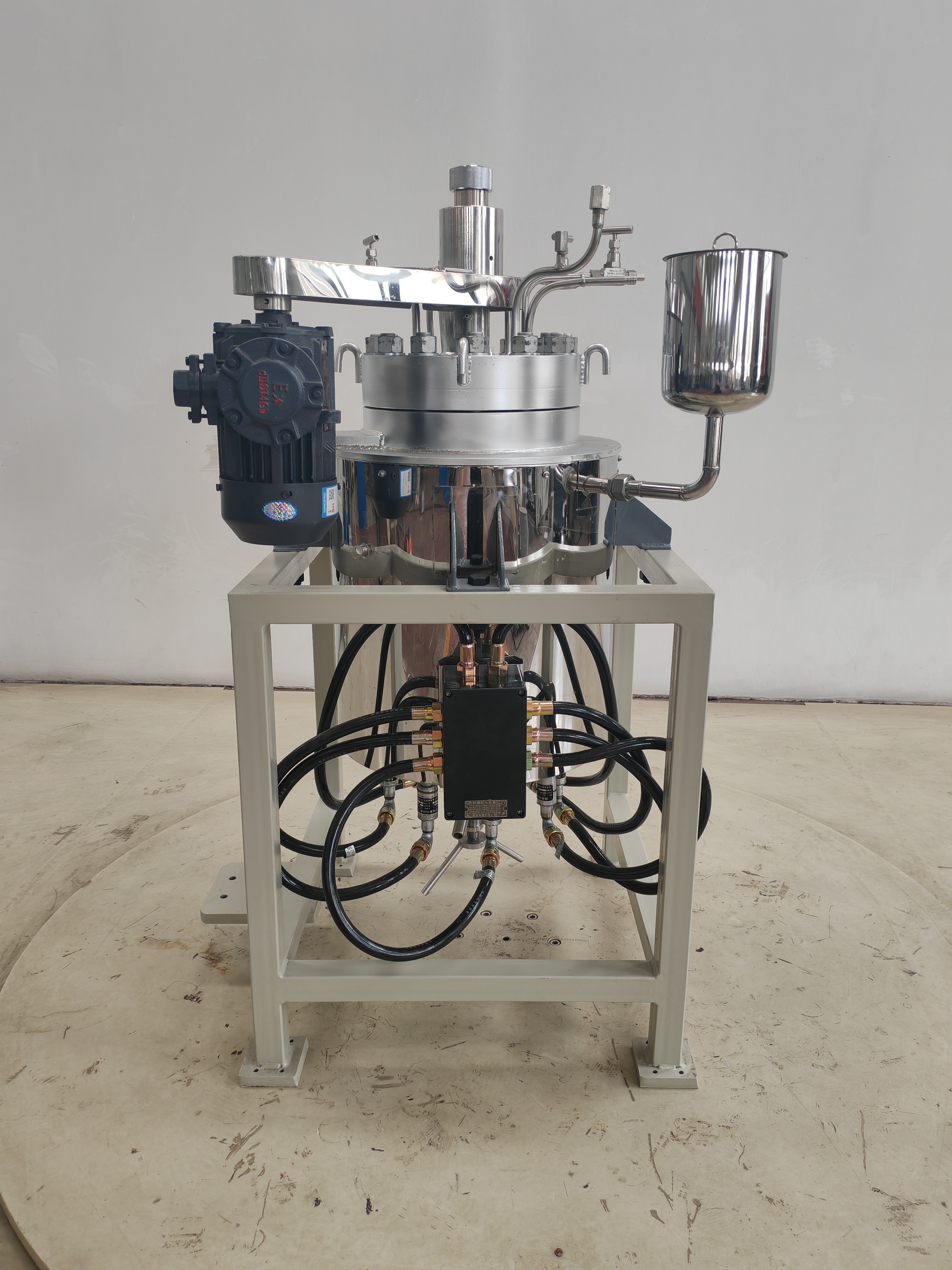
- Jacketed construction: full-length heating/cooling jacket for circulation of thermal oil, water or steam; optional internal cooling coils for rapid quenching.
- Agitation system: top-mounted electric motor with mechanical or magnetic drive, VFD speed control and a choice of impellers (anchor, paddle, turbine, propeller, helical or custom).
- Materials of construction: standard wetted parts in SS304/SS316L. For highly corrosive media, vessels can be manufactured from Hastelloy, titanium, nickel alloys, zirconium or supplied with PTFE / PPL / PFA liners.
- Safety and sealing: clamped lid with metal or soft gasket (graphite, PTFE or elastomer O-ring); safety valve or rupture disc, pressure gauge and over-temperature / over-pressure interlocks.
- Mixer shaft seals: the mixer shaft can have the following types of seals: magnetic coupling, various types of mechanical seals.
- Instrumentation & control: local PID controller or PLC-based system with touchscreen HMI in a separate cabinet. Standard measurements include reactor and jacket temperature, stirring speed and pressure, with alarm thresholds and safety interlocks. Data logging and recipe control are available for QA / GMP documentation. The control panel and the entire installation can also be manufactured in an explosion-proof design according to ATEX certification.
- Compliance: vessels are designed and manufactured according to recognised Chinese GB / JB pressure-vessel codes as used by WHGCM, with hydrostatic and pneumatic tests performed before shipment.
Typical applications
- Catalytic hydrogenation, oxidation and reduction reactions.
- Polymerisation and curing of resins, elastomers and composites.
- Pyrolysis / thermolysis and cracking of organic and polymer materials.
- Synthesis of fine chemicals, intermediates and APIs.
- Crystallisation, precipitation and nanomaterials research.
- Corrosion and materials testing in aggressive media under pressure.
- Process scale-up and optimisation between lab and pilot plant.
Design and construction
The reactor body is fabricated from seamless or forged stainless steel, with a cylindrical shell and a flat or dished head. A conical bottom improves solids suspension and product discharge and is equipped with a bottom outlet valve (manual or pneumatically actuated). The external jacket fully surrounds the vessel for efficient heat transfer.
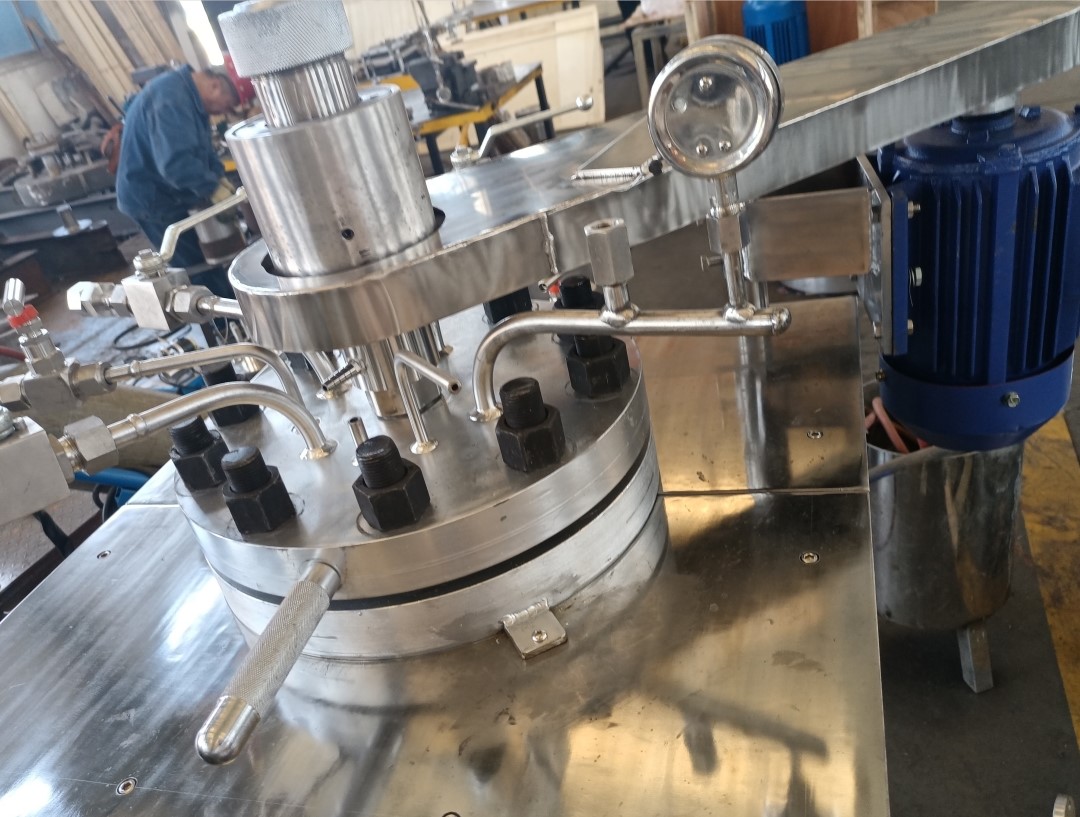
The lid is bolted to the vessel flange with multiple high-strength bolts. Standard nozzle configuration includes:
- gas inlet / outlet,
- liquid feed and sampling ports,
- pressure gauge and safety valve / rupture disc,
- thermowell for a temperature sensor,
- additional nozzles for pH, level or mass-flow controllers on request.
Internal components (impellers, baffles, thermowells, dip tubes) are manufactured from the same material as the vessel or from corrosion-resistant alloys when required.
Agitation & control
Agitation is provided by a top-mounted electric motor with frequency inverter. Depending on sealing requirements, the drive can be:
- a direct mechanical coupling with mechanical seal, or
- a magnetic coupling, ensuring hermetic separation between the motor and the high-pressure process zone.
The shaft may carry one or more impellers selected according to viscosity, gas dispersion and mass-transfer requirements. Typical speed ranges are:
- small reactors (≤10 L): 0–1000/1500 rpm,
- larger reactors (10–50 L): 0–500/750 rpm, adjusted to avoid excessive tip speeds at high viscosity.
The control system (compact controller or full PLC cabinet) usually includes:
- set-point and actual values for reactor temperature, jacket temperature, pressure and stirring speed,
- alarms and interlocks for over-temperature, over-pressure and motor overload,
- digital data logging and optional remote monitoring.
Example configuration – 25 L high-pressure reactor
The attached 25 L drawing represents a typical floor-standing WHGCM reactor with stirring and magnetic seal of the stirrer shaft, lifting column and separate control cabinet. Exact values can be adapted for other volumes in the series.
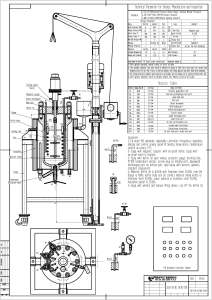
Table 1 – Typical 25 L configuration (indicative values)
| Parameter | Typical value (25 L example) | Comment |
|---|---|---|
| Nominal vessel volume | ~25 L | Total geometric volume of the vessel |
| Practical working volume | ~50–60 % of nominal (≈ 12,5–15 L) | Allows gas head-space and safe foaming margin |
| Design pressure | ≈ 30–35 MPa | As per project specification and applied design code |
| Recommended working pressure | up to ≈ 30 MPa | Conservative limit for routine operation |
| Design temperature | up to ≈ 550 °C | With electrical heater and suitable gaskets |
| Recommended working temperature | up to ≈ 500 °C | Higher temperatures possible in special versions |
| Wetted materials | SS316L vessel and internals; optional Hastelloy / alloys | Choice driven by medium and corrosion requirements |
| Vessel / jacket type | Cylindrical vessel with conical bottom, full-length heating/cooling jacket | Thermal oil, water or steam as heat-transfer medium |
| Heating power | ~6–9 kW electric heaters | Selected to meet required heating rate and available utilities |
| Cooling | Jacket cooling via chiller or cooling water; optional internal coil | Particularly important for exothermic reactions |
| Agitator drive | Top-mounted magnetic drive, VFD controlled | Hermetic drive without dynamic shaft seals |
| Stirring speed range | ~0–750 rpm | Exact range depends on impeller type and motor |
| Motor power | ~0.55–0.75 kW | Explosion-proof motor for flammable solvents |
| Sealing | Clamped lid with metal/soft gasket; magnetic coupling | Provides tightness at high pressure/temperature |
| Support frame | Floor-standing frame with castor wheels and lifting column for the lid | Facilitates safe opening/closing and maintenance |
| Control cabinet | Separate electrical cabinet with PID/PLC controller | Displays temperature, pressure, speed; provides alarms and interlocks |
All values above are indicative and based on supplied project drawings and typical WHGCM specifications. For an exact quotation, certified drawings and strength calculations the final design is agreed case-by-case.
Typical technical ranges for the WHGCM high-pressure reactor series
The following table summarises realistic ranges for the 0.1–50 L WHGCM jacketed laboratory reactors. Values may slightly vary with model, material, design code and customer requirements.
Indicative ranges for standard designs
| Nominal volume range | Typical working pressure | Typical working temperature | Approx. stirring speed range | Typical motor power | Approx. heating power |
|---|---|---|---|---|---|
| 0.1 – 1 L | Vacuum to ~30 MPa | –20…+500 °C (higher for special pyrolysis reactors) | 0–1500 rpm | ≈ 40–80 W | ≈ 3 kW |
| 1 – 10 L | Vacuum to ~30 MPa | –20…+500 °C | 0–1000/1500 rpm | ≈ 80–200 W | ≈ 6 kW |
| 10 – 25 L | Vacuum to ~30 MPa | –20…+500 °C | 0–750/1000 rpm | ≈ 300–750 W | ≈ 9 kW |
| 25 – 50 L | Vacuum to ~30 MPa | –20…+500 °C | 0–500/750 rpm | up to ≈ 2.2 kW | ≈ 18 kW |
Manufacturer & supplier information
Manufacturer: WHGCM (China) – designer and manufacturer of high-pressure laboratory reactors and related equipment.
Official distributor in Europe: Kreator Lab BG – selection, supply, installation and after-sales support of WHGCM high-pressure reactors, chillers and control systems.
Reviews
There are no reviews yet.